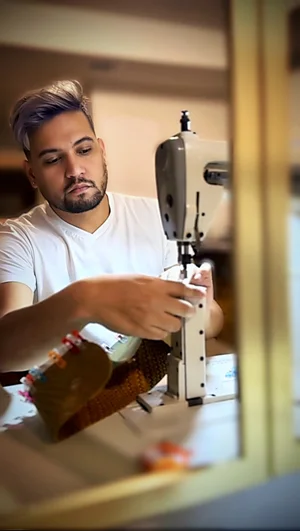
CHRONICLES OF A BAG DESIGNER The Endless Design — Study Series Chapter 1 WHAT IS LEATHER?
CHRONICLES OF A BAG DESIGNER
The Endless Design — Study Series
Episode 1
WHAT IS LEATHER?
A complete guide to leather grades, tanning, weight, and buying smart
Ian Chaffardet
ianchaffardet.com
Author's Note
This document is part of The Endless Design study series — the written companion to my YouTube channel Chronicles of a Bag Designer. It exists because I am teaching myself leathercraft properly, from the beginning, and I want a real reference I can return to.
I have been making leather bags for years. I have taken classes at Tandy Leather. I have watched hundreds of hours of tutorials. I have spent a lot of money on mistakes. But I never learned in order. I learned in pieces, out of sequence, the way most self-taught makers do. This series is my attempt to fix that — to build a real foundation, understand the why behind every decision, and document it so that anyone watching my channel or reading these pages can learn alongside me.
The approach here is simple: explain everything as clearly as possible. No jargon without definition. No technique without context. If a third grader could not follow the logic, I have not explained it well enough.
This is not a finished book. It is a living document. Each episode of the show produces a new chapter. Together they will become a complete curriculum in leather bag making — from raw material to finished product, from hand stitching to industrial machines, from basic construction to pattern design and software.
"Who says education has to cost a second mortgage? If we still have libraries and the internet, we have everything we need." — Ian Chaffardet
The research and perspective in this document are mine. I use tools including AI research assistants and NotebookLM to help organize and deepen my study notes, the same way a student uses a library. The knowledge, the opinions, and the mistakes are all my own.
Chapter One: It Starts With an Animal
Where Leather Comes From
Leather is animal skin that has been treated to prevent decay and make it durable, flexible, and workable. That is the whole idea. Before any tool touches it, before any tannin transforms it, leather starts as the skin of a living creature.
Most leather used in bag making comes from cattle — specifically cowhide. Cowhide is the industry standard because cattle are large animals raised primarily for food, which means their hides are a byproduct of an existing supply chain. The leather industry does not create demand for animal farming — it uses what the food industry produces and would otherwise discard.
Other common leather sources include goat, sheep, pig, deer, horse, and exotic animals like ostrich, crocodile, stingray, and python. Each animal produces leather with distinct characteristics in terms of texture, grain pattern, thickness, strength, and flexibility.
IAN'S TIP For bag making at the level we work at in this series, cowhide is your material. It is available everywhere, comes in every thickness and tanning style you need, and is the industry standard for a reason. You will occasionally see goatskin or sheepskin for linings and soft accessories. We will cover exotic leathers separately — most of what you see labeled as crocodile or ostrich in affordable ranges is embossed cowhide, which we discuss in Chapter Four.
The Anatomy of a Hide
A hide is the entire skin of the animal. Before it reaches you at a leather store or tannery, it has been removed from the carcass, cleaned, and processed. Understanding how a hide is structured is the first practical skill in leathercraft, because different parts of the same hide have completely different characteristics — and buying the right part for the right project is the difference between a bag that holds together for decades and one that stretches, warps, or fails.
Think of the hide like a map. The center of the animal's back is the most valuable territory. The further you move toward the edges — the belly, the legs — the looser and less consistent the fiber structure becomes.
The Butt / Bend
The butt, also called the bend, is the rear section of the hide — the rump of the animal. This is the most valuable part of any hide. The fiber structure here is extremely tight and dense, which means the leather is at its strongest and most consistent. It holds its shape under stress, resists stretching, and produces a uniform thickness that is ideal for precision work.
The butt is where you cut your straps, handles, and any structural component of a bag that needs to hold a load without deforming over time. It is also the part most prized for high-end wallets and belts. You pay more for butt leather, and it is worth it.
Image suggestion: Diagram of a full cowhide showing butt/bend at rear center, shoulder at front, belly at sides, neck at top. Arrows indicating fiber direction and relative quality.
The Shoulder
The shoulder sits above the butt, covering the front upper section of the hide near the neck. It is the second most prized section. The fiber structure is tight but has a degree of flexibility that the butt does not, because this part of the animal moved constantly — the shoulder absorbs the motion of the legs and head.
This flexibility makes shoulder leather excellent for bag body panels. It is strong enough to hold structure but supple enough to take on the slight give that a well-used bag develops over time. Shoulder leather also tends to display more natural markings — growth lines, small wrinkles from movement — which many craftspeople and customers consider desirable character rather than defects.
The Belly
The belly runs along both sides of the hide, from the front legs to the rear. It is the thinnest part of the hide with the loosest fiber structure. This makes it the most flexible section, but also the weakest and most prone to stretching.
Belly leather is not worthless. It works well for linings, gussets in bags where flexibility matters, and smaller items like key fobs or card holders where structural strength is less critical. It is also significantly cheaper than shoulder or butt sections.
However, belly leather stretches differently in different directions — the fiber runs less predictably — so beginners often find it frustrating to work with. When you are cutting pattern pieces for a bag, avoid placing structural elements on belly leather.
The Neck
The neck is the area at the very top of the hide. Like the shoulder, it accommodates a lot of movement — the animal's head moves constantly. The neck tends to be thicker than the belly but has loose grain and can show significant wrinkling and uneven texture.
Professional leatherworkers often avoid the neck for premium work, using it instead for internal structural pieces that will not be visible in the finished product, or discarding it entirely in high-end production.
How a Hide Is Cut for Sale
When you walk into a leather store or browse a leather supplier, you will encounter several standard cuts. Understanding these terms tells you immediately what you are buying and whether it suits your project.
Full Hide: The entire skin of the animal, including all sections. Typically sold by the square foot. Used for large production runs, upholstery, or when you need maximum flexibility in pattern placement. Can range from 40 to 60+ square feet for a large steer.
Half Hide / Side: The full hide split vertically down the spine, giving you one complete side of the animal including shoulder, belly, and butt. Common for smaller workshops and individual craftspeople.
Double Shoulder: Both front shoulder sections of the hide sold together. Popular for bag body panels. Good quality, flexible, natural character.
Bend: The rear section with belly removed. Strong, consistent, excellent for straps and structural components. Premium pricing.
Belly: The side sections. Affordable, flexible, but inconsistent. Best for internal or non-structural uses.
Culatta: The rear half of the hide — the butt and upper leg sections — with the shoulder removed. Premium European cut, particularly associated with Italian tanneries. Excellent quality throughout.
IAN'S TIP At Tandy Leather, you will most often see leather sold as sides, double shoulders, or pre-cut bends. For your first purchases, a double shoulder gives you a good balance of quality and usable area without the expense of a full hide.
Chapter Two: The Quality Ladder
Before we talk about how leather is tanned or what it weighs, we need to talk about grade. Leather quality is not one thing — it is a hierarchy based on which layer of the hide is used and how much processing it has undergone. Most consumers have no idea this hierarchy exists, which is exactly why marketing language around leather is so effective at misleading people.
Think of the hide as having layers, like a piece of wood. The outermost layer — the grain — is the strongest, most durable, and most beautiful. The deeper you go into the hide, the weaker and less consistent the material becomes. Every grade on the quality ladder corresponds to which layer you are working with and how much of it has been altered.
Full Grain Leather
Full grain is the top of the ladder. It is leather from which nothing has been removed. The entire surface of the hide — including every natural marking, scar, insect bite, and growth line — is present and visible. Nothing has been sanded, buffed, or coated to hide imperfections.
This is the highest quality leather available, not in spite of its visible imperfections, but partly because of them. Those markings are proof that the surface is intact. The fiber structure at the grain surface is denser and stronger than anything beneath it. By leaving it untouched, full grain leather retains maximum durability.
Full grain leather breathes. Because there is no coating or finish sealing the surface, it can absorb and release moisture, conditioning oils, and the natural oils from your hands. This is what produces patina — the gradual darkening and enriching of color that makes a well-used full grain bag look better at ten years than it did when it was new.
Image suggestion: Close-up photograph of full grain leather surface showing natural grain variation, small scars or marks, and uneven but authentic texture.
Full grain leather is more expensive because it requires better quality hides. When the full surface is visible, there is nowhere to hide flaws. Tanneries must select hides carefully. This is why you will see full grain leather in genuinely luxury products — Hermes, Gucci, Bottega Veneta at their best — and why bags made from it are priced accordingly.
IAN'S TIP Full grain is what I use for the exterior panels of my best bags. It is the material my brand philosophy is built around. When I say 'age honestly,' I mean this — leather that shows its life as it is lived, not leather that was manufactured to hide what it is.
Top Grain Leather
Top grain is the second level. It is also from the top of the hide, but the surface has been sanded or buffed to remove imperfections. A finish coat — sometimes a pigment, sometimes a clear protective layer — is then applied to create a uniform, clean appearance.
Top grain leather is still genuinely good leather. The underlying material is strong and durable. The surface treatment makes it more stain resistant, more consistent in appearance, and easier for manufacturers to work with because they can use more of each hide without worrying about natural marks. This is why top grain dominates the mid-to-high market — bags sold for $300 to $800 at mainstream retailers are almost always top grain.
The trade-off is patina. Because the surface has been altered and coated, top grain leather does not develop the same depth of character over time. It ages well and maintains its appearance, but it does not transform the way full grain does. A ten-year-old top grain bag looks like a well-maintained top grain bag. A ten-year-old full grain bag looks like a life well lived.
Image suggestion: Side-by-side comparison of full grain and top grain surfaces. Full grain showing natural texture variation. Top grain showing uniform, slightly glossy, flawless surface.
Corrected Grain Leather
Corrected grain occupies the middle of the ladder. The surface has been heavily sanded to remove imperfections and then embossed with an artificial grain pattern — a machine presses a texture into the surface to simulate the look of natural grain that was sanded away.
A finish coat, usually pigmented, is applied on top. The result is a very uniform, very consistent looking material. Under close examination, particularly at the edge of a cut piece, you can often see the tell-tale uniformity of an embossed pattern — every pore exactly the same, no natural variation.
Corrected grain leather is commonly used in furniture, automotive interiors, and mid-range accessories. It is durable and water resistant due to its coating, but it will not develop patina and tends to eventually crack or peel at the surface finish layer rather than aging gracefully.
Split Leather
When a hide is sent to a tannery, it is often split horizontally into multiple layers. The top layer becomes full grain or top grain leather. The bottom layer — or layers — is split leather.
Split leather has no grain surface. The fiber structure is looser and weaker. It is softer than grain leather because of this, which makes it suitable for suede — split leather with the cut surface buffed to a soft nap. It is also used for lower-cost linings and internal structures.
Splits are significantly cheaper than grain leather and significantly weaker. A bag made primarily from split leather will not hold up under regular use the way grain leather will. The edges of split leather cannot be burnished to a clean finish the way grain leather can — they tend to stay fuzzy or require edge paint.
Bonded Leather
Bonded leather sits at the bottom of the ladder. It is not really leather in any meaningful sense, despite being legally allowed to carry the name.
Bonded leather is made from leather scraps and fiber waste — the material left over after all usable leather has been cut away. These scraps are shredded, ground into a pulp, mixed with an adhesive binder, and pressed onto a backing material (usually polyurethane or latex) to form sheets.
The result looks like leather from a distance. It even smells faintly like leather because it contains leather particles. But the structural integrity is essentially that of the binder material — it will crack, peel, and delaminate as the binder degrades, typically within one to three years of use.
Bonded leather is used in mass-market furniture, cheap accessories, and book binding. It has no place in quality bag making. If you see it, walk away.
Image suggestion: Photograph showing bonded leather beginning to crack and peel, contrasted with a piece of full grain leather showing patina.
Chapter Three: The Genuine Leather Scam
Of everything in this book, this chapter is the one that will save you the most money. It is also the one that makes me the most irritated as a craftsperson.
What 'Genuine Leather' Actually Means
Here is the truth about the phrase 'Genuine Leather': it is a grade designation, not a quality assurance. It sits just above bonded leather on the quality ladder — which is to say it is technically real leather, but it is the lowest quality of real leather that can legally exist without further description.
Genuine leather is made from the remaining layers of a hide after the full grain and top grain have been removed. It undergoes significant processing — sanding, buffing, heavy pigment coating — to produce a surface that looks consistent and acceptable. The underlying material is split leather or lower.
The phrase was designed to sound reassuring. Genuine. Real. Authentic. It accomplishes this effectively. Brands stamp it on products and charge prices that suggest quality. The consumer hears 'genuine leather' and thinks they are buying something good. They are buying the floor of the real-leather market.
"Genuine Leather is the one label that sounds premium and means the opposite. When a brand doesn't tell you the grade — when they just say genuine — that's why." — Ian Chaffardet
The Label Logic
Here is the simple rule that will guide you for the rest of your life as a leather consumer and maker:
Quality leather announces its grade. Full grain leather says 'full grain.' Top grain leather says 'top grain.' When a brand is proud of what they are using, they tell you specifically what it is.
When a brand says only 'genuine leather,' 'real leather,' or simply 'leather,' with no further specification, they are using the lowest grade legally allowed. That is not an accident. It is a deliberate choice to use vague language that sounds better than what the material actually is.
This is not illegal. It is not counterfeiting. It is marketing. But now you know how to read it.
IAN'S TIP When evaluating any leather product — bag, wallet, belt, anything — look for the grade. If it does not say full grain or top grain, assume it is not. If it just says genuine leather, you know exactly where it sits on the ladder.
How to Identify Genuine Leather by Touch and Look
You do not always have a label to read. Here is how to evaluate leather quality without one:
Look at the cut edge. Full grain and top grain leather show consistent fibrous texture at cut edges — you can see the fiber structure, and it is relatively uniform. Genuine leather and split leather often show a layered structure, sometimes with a thin surface skin over a fuzzy core. Bonded leather shows an obvious layering with non-leather material visible.
Check for surface uniformity. Full grain leather has natural variation — the grain pattern shifts slightly across the surface, pores vary in size, small natural marks are visible. Corrected grain and heavily processed leather looks too perfect — every pore identical, no variation. If it looks too uniform to be from an animal, it probably is not from the surface of one.
Press your fingernail gently into the surface. On full grain and good top grain leather, a light pressure mark will appear and then slowly recover. Bonded and processed leather often does not recover the same way — the mark stays or the surface cracks.
Smell it. Genuine high-quality leather has a distinctive earthy, slightly sweet smell that comes from the tanning process. Heavily processed leather smells more chemical. PU leather and bonded leather smell like plastic. This sounds subjective — and it requires some experience to read well — but it is a real and reliable signal.
Flex it. Good grain leather flexes naturally and returns to shape. Split leather tends to feel slightly papery when flexed. Bonded leather stiffens and may crack at the flex point after repeated use.
Chapter Four: How Leather Is Made — The Tanning Process
Raw animal skin rots. Left untreated, it would decompose within days. Tanning is the process of chemically treating raw hide to stabilize it — to transform perishable skin into leather that can last centuries. Understanding tanning is not just academic history. It directly determines how your leather behaves when you work with it, what tools you use, how it ages, and what it is suited for.
There are several tanning methods, but in bag making, two dominate: vegetable tanning and chrome tanning. Everything else you encounter will either be one of these, a combination of them, or a variation on them. We will cover both in depth, then briefly address combination tanning.
Vegetable Tanning
Vegetable tanning is the oldest method of producing leather. Evidence of vegetable-tanned leather exists from ancient Egypt — around 4,000 BCE — and the fundamental chemistry has not changed in five thousand years. This is the leather that your brand philosophy lives in.
The Science Behind It
Tannins are naturally occurring compounds found in many plants — in the bark, leaves, seeds, and wood. The word 'tanning' is literally derived from 'tan,' the old word for oak bark, which was one of the primary early sources of tannins in European leathermaking.
Tannins are astringent. If you have drunk a heavy red wine and felt that drying, slightly puckering sensation in your mouth, you have felt tannins. They bind to proteins. In leather, those proteins are the collagen fibers that make up the hide. When tannins bind to collagen, they cross-link the protein chains, stabilizing them against decay and creating the flexible, durable material we call leather.
Common tannin sources used in commercial vegetable tanning today include: oak bark, chestnut wood, quebracho tree (South America), mimosa (wattle bark), tara pods (Peru), and sumac leaves. Different tannin sources produce leather with slightly different characteristics in color, firmness, and finish. Italian tanneries, particularly in Tuscany, are renowned for their specific tannin blends and traditional pit-tanning methods.
Image suggestion: Cross-section diagram showing tannin molecules binding to collagen fibers in the hide. Simplified illustration suitable for educational use.
The Vegetable Tanning Process — Step by Step
Understanding this process will change how you look at veg tan leather. When you hold a piece, you are holding something that took months to make.
Arrival and Soaking (Rehydration). Raw hides arrive at the tannery salted or dried to prevent decay during transport. They are first rehydrated in large vats of water to restore their natural state.
Liming. The hides are placed in a lime solution — calcium hydroxide — for several days. Lime is alkaline and does two things: it removes the hair from the grain side, and it opens up the collagen fiber structure to prepare it for tannin penetration. After liming, the hide is 'de-limed' with a mild acid to neutralize the pH before tanning begins.
Fleshing. Any remaining flesh and fat on the hide's interior surface is mechanically removed.
Splitting (if required). At this stage, the hide may be split horizontally to the desired thickness. The top layer continues as grain leather. The bottom layer becomes split leather.
Tannin Baths. This is the core of the process. Hides are placed in a series of baths or pits with increasing concentrations of tannin solution — from weak to strong — and moved progressively from one to the next over days or weeks. The slow progression allows tannins to penetrate evenly throughout the hide thickness. Traditional pit tanning, still used by a small number of prestigious tanneries, can take six to twelve months for a full sole leather hide.
Drum Tanning. Modern vegetable tanneries use rotating drums filled with tannin solution to accelerate penetration. The mechanical action of the drum speeds the process considerably — from months in pits to days or weeks in drums. Drum-tanned veg tan leather is still excellent quality, though purists argue that slow pit tanning produces superior firmness and density.
Drying. The tanned hides are removed and dried, either by hanging or by being fixed to large frames. The drying process must be controlled — too fast and the leather cracks, too slow and mold can develop.
Fat Liquoring and Finishing. The dried leather is treated with oils and waxes to restore moisture and suppleness lost during drying. Without this step, veg tan leather would be brittle. Different finishing treatments produce different characteristics — some veg tan is left relatively stiff for soles and straps, some is made more supple for bag panels.
Final Finishing. The leather may be dyed, polished, embossed, or given a surface treatment depending on its intended use.
Characteristics of Vegetable-Tanned Leather
Understanding these characteristics tells you when to use veg tan and when not to.
Color: Natural veg tan leather is a pale tan to light caramel color — the color most people picture when they think of classic leather. This natural color is receptive to dyes, so it can be colored almost any shade, but its starting point is always warm and natural.
Firmness: Veg tan leather is firm, especially when new. This is desirable for structured bags, straps, and handles. The firmness softens with use and conditioning over time.
Edge burnishing: One of the most important characteristics for bag makers: the cut edges of veg tan leather can be burnished to a smooth, sealed finish using friction and a burnishing tool. This produces the clean, professional edge finish associated with high-quality leather goods. Chrome tan edges cannot be burnished the same way.
Patina: Veg tan leather develops patina. Exposure to light, oils from your hands, moisture, and general use darkens and enriches the color over time. A piece of veg tan leather used daily for ten years becomes richer and more beautiful. This is the material your brand's 'age honestly' philosophy was made for.
Water sensitivity: Veg tan leather is more sensitive to water than chrome tan. It can stain when wet and may stiffen or warp if soaked and not properly dried. This is manageable with proper conditioning and protective treatments, but it is a genuine consideration.
Tooling: Veg tan leather is the only type that accepts carving, stamping, and tooling. When dampened slightly, it becomes pliable and holds impressions permanently as it dries. Chrome tan leather cannot be tooled.
Environmental impact: Vegetable tanning uses natural, biodegradable materials. The wastewater from veg tan processing is significantly less harmful than chrome tanning effluent. This is part of why veg tan leather is associated with sustainable luxury production.
IAN'S TIP Veg tan leather makes up only about 15 to 20 percent of global leather production. It is more expensive and more time-consuming to produce. When you find it, you are holding something genuinely rare in the context of modern manufacturing.
Chrome Tanning
Chrome tanning was developed in the 1850s and became the dominant global tanning method by the early twentieth century. Today, approximately 80 to 85 percent of all leather produced worldwide is chrome tanned. It is the leather of the modern age — fast, consistent, and versatile.
The Chemistry
Chrome tanning uses chromium sulfate — specifically trivalent chromium (Cr III) — to tan the hide. Chromium ions form cross-links with the collagen fibers in the hide, stabilizing them against decay, much like tannins do in vegetable tanning. But where vegetable tanning works through accumulation over weeks, chromium works through direct chemical bonding in hours.
The process produces what tanners call 'wet blue' — hides that have absorbed chromium salts and turned a distinctive pale blue-gray color. Wet blue is an intermediate state. Tanneries sell wet blue to other processors who then re-tan, dye, and finish it into the final leather product. The wet blue trade is a global commodity.
Image suggestion: Photograph of wet blue hides stacked in a tannery, showing the distinctive blue-gray color characteristic of chromium absorption.
The Chrome Tanning Process — Step by Step
Preparation. Same as veg tan — soaking, liming, de-liming, fleshing, and splitting.
Pickling. The hides are treated with a salt and acid solution to lower the pH and prepare the collagen for chromium absorption.
Chromium Bath. Hides are placed in rotating drums with chromium sulfate solution. The process takes approximately 24 hours. The chromium penetrates the hide and binds to the collagen fibers. The hides emerge blue-gray — wet blue.
Basification. The pH is raised to fix the chromium permanently in the hide.
Re-tanning and Dyeing. Wet blue hides are re-tanned — treated with additional tanning agents, which may be vegetable-based, synthetic, or additional chrome — to develop specific characteristics. Dyes are applied in this stage. Chrome tan can achieve a much wider color range than veg tan because it starts as a neutral base.
Fat Liquoring and Finishing. Oils are added for suppleness. Surface finishes — coatings, waxes, embossing — are applied depending on the intended end use.
Characteristics of Chrome-Tanned Leather
Softness and drape: Chrome tan leather is softer and more pliable than veg tan straight out of the tannery. It drapes and conforms to shapes more easily, which is why it dominates fashion leather, garments, and soft bag construction.
Water resistance: Chrome tan leather is significantly more water resistant than veg tan. The chromium treatment and typical finish coatings provide a natural barrier against moisture. This makes it practical for everyday bags that will encounter weather.
Color range: Chrome tan leather can be dyed in virtually any color with exceptional consistency. The fashion industry depends on this — chrome tan is how you get perfectly consistent cobalt blue or deep burgundy across an entire production run.
Edge finishing: Cut edges of chrome tan leather do not burnish the way veg tan does. They typically require edge paint or edge coating to produce a clean finish. This is a workflow difference, not a quality difference — but it requires different tools and techniques.
Patina: Chrome tan leather does not develop the same patina as veg tan. It ages more gracefully than synthetic materials, but its appearance is more stable over time. This suits fashion products where maintaining the original look is desirable.
Hot creasing: Chrome tan leather can be shaped and creased using heat in ways that veg tan cannot. Industrial bag making uses this to create crisp, permanent folds and architectural shapes.
Environmental considerations: Chrome tanning generates chromium-containing wastewater. Trivalent chromium (Cr III) used in tanning is significantly less toxic than hexavalent chromium (Cr VI), which is a carcinogen. However, improper disposal of tanning effluent is a genuine environmental problem in countries with weak regulation. Ethical sourcing from regulated tanneries matters.
Combination Tanning — The Best of Both
Combination-tanned leather, sometimes called semi-vegetable or chrome-re-tan leather, uses elements of both processes. The most common approach: chrome tan first for speed and efficiency, then re-tan with vegetable tannins to develop some of the characteristics associated with veg tan — firmer hand, better edge burnishing, some capacity for patina development.
Latigo leather is a well-known combination-tanned leather common in the equestrian and saddlery world. It is oil-tanned and combination-tanned, producing a leather that is soft, very water resistant, and extremely durable. You will see it at Tandy Leather. It is excellent for straps and handles.
Bridle leather is another combination-tanned leather traditionally used for horse tack. Dense, waxy, extremely durable. Popular in traditional English bag making.
Image suggestion: Comparison table or diagram showing veg tan vs chrome tan properties across six characteristics: softness, water resistance, edge burnishing, patina, color range, environmental impact.
Chapter Five: The Materials That Are Not Leather
Knowing what leather is requires knowing what it is not. The market is full of materials that look like leather, are priced like leather, and are labeled in ways designed to confuse consumers. This chapter clears that up.
Embossed Leather — Real Leather, Fake Pattern
Embossed leather is real leather — usually corrected grain cowhide — that has had a pattern pressed into its surface under high heat and pressure to simulate the appearance of another material. The two most common are crocodile (alligator) grain and ostrich grain.
This is not inherently deceptive if it is priced and described honestly. Embossed cowhide is still real leather. It ages, it wears, and it behaves like leather. The pattern is artificial but the material is genuine.
The problem arises when embossed leather is sold as the exotic material it resembles. Genuine crocodilian leather — from caiman, American alligator, Nile crocodile, or saltwater crocodile — is a regulated material with specific characteristics: each scale is a distinct, independent piece of skin. Under real croc leather, you can see and feel the tile-like individuality of each scale. Embossed cowhide has a stamped, uniform pattern that lacks this individuality.
Real ostrich leather has distinctive quill follicles — raised, rounded bumps where the feathers were. They are genuinely three-dimensional and distributed in a specific natural pattern. Embossed ostrich grain is a printed approximation.
IAN'S TIP I use embossed leather in some of my work. It gives the look of an exotic material without the cost, the ethical concerns, or the legal complexity of working with protected species. There is nothing wrong with using it — just know what you have and price your work accordingly. Do not charge exotic leather prices for embossed cowhide.
PU Leather — Polyurethane Coated Fabric
PU leather is not leather. It is a fabric backing — usually polyester — with a polyurethane coating applied to the surface. The coating is colored and textured to resemble leather. It is also called faux leather, vegan leather (in many cases), leatherette, and synthetic leather.
PU leather has some practical advantages: it is inexpensive, consistent, available in every color imaginable, and easy to clean. It is used extensively in fast fashion, budget furniture, and mass-market accessories.
The fundamental problem with PU leather is its failure mode. Real leather, even lower grades, ages in ways that are manageable — it can crack if neglected, but it can also be conditioned, repaired, and maintained. PU leather degrades through delamination — the polyurethane coating separates from the backing and peels away. Once this begins, it cannot be repaired. The material is finished.
Delamination typically begins within three to five years of regular use, and can begin much sooner under heat, UV exposure, or with body oils and sweat. A bag that cost $80 and peels after two years is not a bargain — it is waste.
Image suggestion: Photograph showing PU leather peeling and delaminating, with fibers of the backing fabric visible underneath the cracking surface coating.
Bonded Leather — Already Covered, Worth Repeating
We covered bonded leather in Chapter Two, but it is worth restating here in the context of what to avoid: bonded leather uses the word 'leather' legitimately but represents the absolute floor of the material. Ground-up scraps, binder, backing. It looks like leather and smells faintly like it, but behaves like the binder — which means it cracks and peels as the binder degrades.
Microfiber Leather
Microfiber leather is a synthetic material made from extremely fine polyester fibers bonded with polyurethane. It is also called Alcantara (a branded version), ultrasuede, or synthetic suede. It does not contain any animal skin.
Microfiber leather is actually a legitimate and high-quality material for specific applications — particularly linings. Alcantara is used by luxury car manufacturers and in high-end bags as an interior lining material. It is durable, soft, does not scratch contents, and is produced without the ethical concerns of animal leather. Used as a lining in a leather bag, it is an excellent choice.
The issue is when microfiber leather is presented as a substitute for full leather panels. It does not age the same way, does not have the same structural characteristics, and it is a fundamentally different material experience.
A Note on 'Vegan Leather'
The term 'vegan leather' is a marketing category, not a material specification. It includes PU leather, microfiber, plant-based alternatives (pineapple leather / Pinatex, mushroom leather / Mylo, apple leather, cactus leather), recycled plastics, and other synthetic materials.
Some vegan leather alternatives are genuinely interesting materials with real applications. Pinatex, made from pineapple leaf fibers, is used in accessories and shoes by a number of legitimate fashion brands. Mylo, made from mycelium, was used in limited collaborations by Stella McCartney and Hermès.
However, most products labeled 'vegan leather' in mass retail are PU leather — the polyurethane-coated fabric that peels. Consumers who choose vegan leather for ethical or sustainability reasons are often unknowingly choosing a petroleum-based product with a shorter lifespan than genuine leather, which produces significant microplastic waste when it degrades.
This is not a judgment on the choice — it is information you need to make an honest decision.
Chapter Six: Understanding Leather Weight and Thickness
This is the chapter that most beginners skip or skim, and it is the one that causes the most practical problems. Choosing the wrong weight of leather for a project does not just affect the look — it affects whether you can stitch it, whether your tools can handle it, whether the finished bag holds its shape, and whether the hardware sits correctly.
The good news: the system is simple once you understand what it is measuring.
The Ounce System
Leather thickness in the United States is measured in ounces. Specifically, in ounces per square foot. This sounds confusing at first but it is actually a convenient shorthand: one ounce of thickness equals approximately 1/64 of an inch, or about 0.4 millimeters.
So when you see leather labeled as '4 oz,' it means that a square foot of that leather weighs approximately 4 ounces — and more practically, it is approximately 4/64 of an inch thick, or about 1.6 millimeters. The weight and the thickness track together because leather has a relatively consistent density.
The European Millimeter System
Outside of the United States, leather thickness is measured directly in millimeters. If you are ordering leather from a European supplier, the listing will say something like '1.5-1.7mm' or '2.0-2.2mm' rather than '4-5 oz.' The millimeter system is more intuitive and increasingly common even in American craft communities.
The conversion is straightforward: multiply ounces by 0.4 to get approximate millimeters. A 4 oz leather is approximately 1.6mm. A 6 oz leather is approximately 2.4mm.
IAN'S TIP Leather is not perfectly consistent in thickness. A piece labeled as 4 oz may vary between 3.5 and 4.5 oz across the same side. The butt section will be thicker than the belly. When precision matters — for pattern work especially — measure your actual leather with a digital caliper rather than relying entirely on the label.
Choosing Weight for Bag Making
Here is the practical guide by bag component:
Lining leather: 1-3 oz. You want this thin and flexible. It should add minimal bulk inside the bag and fold cleanly at seams. Soft chrome tan or split suede are common lining choices. At 2oz, it is comfortable to stitch through in combination with your exterior leather.
Bag body panels — soft bags: 2-4 oz. A tote, a soft shoulder bag, a bucket bag that you want to drape — this is your range. Chrome tan at 3oz has great drape and flexibility.
Bag body panels — structured bags: 4-6 oz. A satchel, a briefcase, a structured top-handle bag — you need the leather to hold its shape without an internal frame. Veg tan in this range is ideal.
Straps and handles: 5-8 oz. Handles take the full weight of a loaded bag repeated tens of thousands of times over the life of the bag. Thin straps fail. Use shoulder or butt leather in 5-8oz for any carrying element.
Bottom panels and bases: 6-8 oz. The base of a bag takes the most punishment — set down repeatedly, scraped across surfaces, supporting full load. Heavier leather here extends the life of the bag significantly.
Hardware reinforcement: 4-6 oz. Where rivets, D-rings, and closures attach, the leather must resist tearing. Double up layers if necessary rather than use thin leather at hardware points.
Skiving — Reducing Thickness Where You Need To
Sometimes the leather you have is the right quality but the wrong thickness for a specific application — a fold, a turned edge, a transition between panels. This is where skiving comes in.
Skiving is the process of thinning leather by shaving away material from the flesh side. Done correctly, it reduces the leather smoothly and evenly to exactly the thickness needed. It is one of the most important skills in refined leather bag construction.
Why Skive?
When two pieces of leather are folded over each other at a seam, the total thickness at the fold can make the seam bulky, hard to stitch, and uncomfortable. By skiving the leather at the seam zone — thinning it before the fold — you eliminate bulk without sacrificing strength in the main panel.
Folded edges — where the leather is turned back on itself for a clean interior edge — require skiving to fold cleanly. A 4oz leather folded directly would create a ridge half an inch tall. Skived to 1-2oz at the fold zone, it lies flat and smooth.
Skiving Tools
Several tools are used for skiving, each with specific applications:
Japanese skiver (or safety skiver): A small, handled blade with a replaceable edge. Designed for controlled, precise skiving along a line or at a fold zone. Good for beginners because the guard limits how deep the blade can cut.
French edger: A wider, shovel-shaped blade used to skim a consistent thin layer off a surface area. Better for large-area thinning than edge work.
Leather skiving machine: A powered machine that runs leather through a set of rollers and a calibrated blade, reducing thickness to an exact, consistent measurement. Produces very consistent results across a full side or large panel. The Speedway SW XYP 4 is an example of a professional electric skiver. Dramatically faster than hand skiving for production work.
Bell knife skiver: An industrial machine using a rotating circular blade. Found in production tanneries and large leather goods factories. Not practical for small workshops.
Step-by-Step: Hand Skiving an Edge
This is the most fundamental skiving technique — thinning leather at the edge before a turned or folded seam. Practice this on scrap leather before attempting it on a finished piece.
Prepare your work surface. Skiving should always be done on a hard, smooth surface — a piece of thick glass is ideal because it will not dull your blade as quickly as a cutting mat. Your leather should be flesh side up.
Mark your skiving zone. Use a wing divider or a scratch awl and ruler to mark a line parallel to the edge at the width you want to thin. For a folded edge, this is typically the depth of the fold plus a small margin — usually 8-15mm.
Wet the leather slightly (veg tan only). Veg tan leather is easier to skive when slightly damp — the fibers compress and cut more cleanly. Use a damp sponge on the flesh side in your skiving zone. Chrome tan does not benefit from this and may be skived dry.
Set your blade angle. Your skiving blade should be held at a low angle to the leather surface — approximately 10 to 20 degrees. The lower the angle, the more gradual and controlled the skive. Higher angles create steeper cuts that are harder to control.
Begin the cut at the edge. Start the blade at the very edge of the leather, with the bevel facing the leather surface. Use a smooth, controlled pulling motion toward you, maintaining consistent blade angle and pressure. The goal is to shave away a thin, even layer of the flesh side.
Work toward your marked line. Make multiple passes if needed rather than trying to remove all material in one cut. Each pass should remove a consistent amount. The leather should become visibly thinner and more flexible in the skived zone.
Check your work. Hold the skived edge up to light and look at it from the side. The thickness should taper smoothly from the full thickness of the leather in the body to near paper-thin at the edge. There should be no ridges, steps, or uneven spots.
Clean up the cut. If there are high spots, make a light additional pass to even them out. The skived surface should feel smooth when you run your fingernail across it.
IAN'S TIP The most common beginner mistake in skiving is using too much downward pressure. Skiving is a slicing action, not a scraping one. Let the sharpness of the blade do the work. If you are pressing hard, your blade needs sharpening. A dull skiving blade produces ragged, uneven results regardless of technique.
Chapter Seven: How to Buy Leather — A Practical Field Guide
Everything in the previous chapters becomes practical here. This is the chapter you keep in your pocket when you walk into a leather store or sit down at a computer to order from a supplier.
Where to Buy
There are two primary channels for buying leather as a craftsperson: physical retail stores and online suppliers. Both have advantages and disadvantages, and the right choice depends on what you are buying and how much experience you have.
Physical Retail — Why Start Here
For any beginner, and for any craftsperson working in a new material or weight, buying leather in person is strongly recommended. The reason is simple: leather is a tactile material. Its weight, hand, flexibility, and finish are things you must feel, not read. A product description can tell you a leather is '4oz chrome tan with a matte finish' — but it cannot tell you whether it feels right for the bag you are making.
Tandy Leather is the most accessible national chain in the United States for leather craft supplies. They carry a good selection of veg tan in various weights, chrome tan, latigo, tooling leather, and a range of hardware and tools. Their staff, particularly at well-established locations, often have genuine craft knowledge and can advise on material selection for specific projects.
At a physical store, you can: feel and flex the leather before buying, compare multiple weights and finishes side by side, identify belly versus butt sections of a hide, check for consistent thickness and surface quality, and ask questions from someone who uses the material.
How to Evaluate Leather at the Store
When you pick up a piece of leather at a store, run through these checks before deciding to buy:
Read the tag completely. Look for: the type of leather (veg tan, chrome tan, latigo, etc.), the weight in ounces, the price per square foot, and the square footage of the piece. Note what it does not say — if it says only 'leather' or 'genuine leather' with no grade specification, ask.
Check the grain surface. Look for consistency. Natural variation is fine. Cracking, peeling, or obviously heavy coating that obscures the grain are warning signs. On veg tan, the grain should feel slightly firm and fibrous. On chrome tan, it should feel soft and smooth.
Flex the piece. Fold it gently — not sharply — and feel how it returns. Good leather springs back with character. Stiff leather that cracks at the fold is over-dried or has quality issues. Leather that stays folded with no spring may be too heavily processed.
Check the flesh side. The flesh side of quality leather should be smooth, slightly napped, and consistent in color. A very fuzzy or inconsistent flesh side may indicate split leather or lower quality processing.
Look at the cut edge (if visible). A clean cut edge shows the fiber structure of the leather. Consistent, tight fibers from surface to surface indicate good quality. Visible layering, a thin surface skin over a different material, or a papery core are all red flags.
Check for belly sections. If you are buying a side or a large piece, identify the belly — it will feel thinner, softer, and stretchier than the shoulder and butt. This is not a defect, but you need to account for it in your pattern layout.
Smell it. This sounds odd but it is reliable. Quality leather — especially veg tan — has a rich, earthy smell. Chrome tan is more neutral. Heavy chemical smells, plastic smells, or an absence of any leather smell are all worth noting.
Online Suppliers — When to Use Them
Once you have handled enough leather to know what you are looking for, online suppliers open up a much wider selection at often better prices than retail. Key reputable suppliers for bag making leather include:
Tandy Leather (tandyleather.com): Also sells online. Reliable quality, good consistency, good for beginners. Selection is broad but not as specialized as dedicated tannery suppliers.
Springfield Leather (springfieldleather.com): Excellent selection, good staff knowledge, competitive pricing. Particularly good for veg tan in various weights and finishes.
Rocky Mountain Leather (rmleathersupply.com): Premium selection, excellent quality Italian and domestic leathers. Good for full-grain and specialty materials. Higher price point.
Wickett & Craig (wickett-craig.com): One of the few remaining American veg tan tanneries. Their leather is produced domestically in Pennsylvania using traditional methods. Excellent quality, excellent for straps and structural components.
Horween Leather (horween.com): The most famous American tannery. Their Chromexcel, Essex, Dublin, and other leathers are legendary in the craft world. Not a retail supplier — you buy Horween leather through authorized distributors.
Italian tanneries (through distributors): Badalassi Carlo, Conceria Walpier, Conceria Antiba produce some of the finest veg tan leather in the world. Their leather is available through specialty distributors including Italian leather supply companies.
Understanding Pricing
Leather is priced by the square foot. Prices vary widely based on grade, tannage, origin, and thickness. Here is a general guide to what to expect as of 2026:
Domestic chrome tan sides (basic): $2-5 per sq ft. Standard quality, usable for bags, consistent.
Domestic veg tan shoulders: $4-8 per sq ft. Good quality, suitable for most bag applications.
Premium domestic veg tan (Wickett & Craig, Hermann Oak): $8-15 per sq ft. Excellent quality, appropriate for best work.
Italian veg tan (Badalassi Carlo, Walpier): $12-25 per sq ft. Premium European quality, known for specific finishing characteristics.
Exotic and specialty materials: $30-200+ per sq ft. Genuine crocodilian leather, ostrich, stingray, python. Prices vary enormously by species and quality.
IAN'S TIP Buy more than you think you need. Always add at least 20-30 percent to your calculated pattern square footage to account for belly sections, natural defects you will want to work around, and cutting waste. Running short on leather in the middle of a project is one of the most frustrating experiences in craft — and it is avoidable.
Measuring a Hide and Calculating Yardage
Leather is sold by the square foot, not by the yard. When you pick up a side of leather, the tag will show its square footage. To know if you have enough leather for your project, you need to know how many square feet your pattern pieces total.
Step-by-Step: Calculating How Much Leather You Need
Trace each pattern piece onto graph paper or a flat surface. If you are using Patternsmith, the software calculates this automatically. For hand pattern work, trace each piece with a pencil, including all pieces for the bag: front panel, back panel, gussets, straps, handles, any pockets or flaps.
Calculate the area of each piece. For rectangles: multiply length by width. For irregular shapes: break them into rectangles and triangles and sum the areas. For truly complex curves, trace onto graph paper with a known scale and count squares.
Sum all piece areas in square inches.
Convert to square feet. Divide the total square inch area by 144 (144 square inches = 1 square foot).
Add waste factor. Multiply your square footage by 1.3 (adding 30 percent). This accounts for belly sections you will avoid, natural defects, and cutting error. For complex patterns with many irregular pieces, use 1.4.
Compare to the hide you are evaluating. If your calculation says you need 8 square feet and the side in front of you is 22 square feet, you have more than enough. If you need 8 square feet and you are looking at a belly piece that is 9 square feet, you may be cutting it too close given the stretch and inconsistency in belly sections.
Note for Patternsmith users: The software calculates pattern piece areas automatically and can estimate hide requirements. This is one of its core practical functions — eliminating the manual calculation step and accounting for piece nesting to minimize waste.
Chapter Eight: Glossary of Terms Used in This Episode
All terms introduced in this episode, with definitions in plain language. This glossary is designed to be a standing reference — return to it as often as needed.
Leather Grades and Types
Full Grain Leather: The highest quality leather grade. The complete surface of the hide is used with no sanding or buffing. All natural marks and variation are preserved. The strongest and most durable grade. Develops patina.
Top Grain Leather: Second highest grade. The surface has been sanded to remove imperfections, and a finish coat is applied. Consistent appearance, good durability, less patina development than full grain.
Corrected Grain Leather: The hide surface is heavily sanded and an embossed artificial grain pattern is applied. Very uniform appearance. Does not develop meaningful patina.
Split Leather: The lower layer of the hide after splitting. No grain surface. Weaker fiber structure. Used for suede and low-cost applications.
Bonded Leather: Not real leather in any practical sense. Ground leather scraps mixed with binder and pressed onto backing. Cracks and peels as the binder degrades.
Genuine Leather: A grade designation — the lowest quality of real leather legally allowed to be called leather without further specification. Made from lower hide layers with heavy processing. Not a quality assurance.
Suede: Split leather with the flesh side buffed to a soft nap. The velvet texture is characteristic. Not suitable for exterior bag panels but used for linings and accents.
Nubuck: Top grain leather with the grain surface buffed to a soft, velvety texture. Unlike suede, nubuck is from the grain side. More durable than suede.
Latigo: A combination-tanned leather — typically chrome and vegetable — that is also oil-tanned. Very durable, supple, and water resistant. Common in saddle making and bag straps.
Bridle Leather: A traditional combination-tanned leather waxed with a surface dressing that fills the pores and gives it exceptional water resistance and durability. Originally developed for horse tack.
Tanning Terms
Tanning: The process of chemically stabilizing raw animal skin to prevent decay and create leather.
Vegetable Tanning (Veg Tan): Tanning using plant-based tannins. Produces firm, natural-colored leather that develops patina. Takes days to months.
Chrome Tanning: Tanning using chromium sulfate. Produces soft, water-resistant leather in a wide color range. Takes approximately 24 hours.
Combination Tanning: Using elements of both vegetable and chrome tanning to achieve specific characteristics of each.
Tannins: Naturally occurring plant compounds that bind to collagen proteins in hide, stabilizing them to create leather. Found in bark, leaves, fruits, and wood of many plant species.
Wet Blue: Hides that have completed the chrome tanning process and are dyed a distinctive blue-gray color by chromium absorption. An intermediate product traded globally between tanneries.
Patina: The gradual enrichment of leather color and character through use and exposure. Natural oils from hands, UV light, and general wear darken and deepen the color of vegetable-tanned full grain leather.
Re-tanning: A secondary tanning process applied after the primary tanning to modify characteristics — add softness, firmness, or specific finish qualities.
Fat Liquoring: The addition of oils and fats to leather after tanning to restore moisture and suppleness lost during processing.
Hide Anatomy Terms
Hide: The complete skin of a large animal — cattle, horse, etc. — prepared for tanning.
Skin: The complete skin of a smaller animal — sheep, goat, pig. Same concept as hide but the term changes by animal size.
Grain Side: The outer surface of the hide — the side that was exposed to the world during the animal's life. The grain is where the hair follicles were. This is the visible, finished side of most leather goods.
Flesh Side: The inner surface of the hide — the side that was attached to the animal's body. Typically sueded or left as a flat, slightly napped surface. In finished leather goods, this is the interior side.
Butt / Bend: The rear section of the hide. Tightest fiber structure, most durable, most consistent. Premium material.
Shoulder: The front upper section of the hide. Strong and flexible, excellent for bag panels. May show natural growth marks.
Belly: The side sections of the hide. Thin, loose fiber structure, prone to stretching. Less durable. Good for linings and non-structural uses.
Neck: The upper section at the top of the hide. Thick but loose grain, often wrinkled from head movement.
Culatta: The rear half of a hide — butt and upper leg area — without the shoulder. Premium cut associated with Italian tanneries.
Side: Half of a full hide, cut down the spine. The most common retail unit.
Measurement Terms
Ounce Weight (oz): The thickness measurement system used for leather in the United States. 1 oz = approximately 1/64 inch or 0.4 mm. A 4 oz leather is approximately 1.6 mm thick.
Square Foot (sq ft): The unit of area used to price leather. A side of leather may be 20-25 square feet. Leather is priced per square foot.
Millimeter (mm): Thickness measurement used outside the US and increasingly common in American craft communities. 1 oz = approximately 0.4 mm.
Construction and Process Terms
Skiving: Thinning leather by shaving away material from the flesh side. Done before folds, turned edges, and seams to reduce bulk.
Burnishing: Polishing and sealing the cut edge of leather — particularly veg tan — using friction from a wood or plastic burnishing tool, often with water or edge solution. Creates a smooth, professional, sealed edge finish.
Edge Paint: A liquid coating applied to the cut edges of chrome tan and other leathers that do not burnish well. Applied in multiple coats and typically heat-set or allowed to dry for a clean edge finish.
Tooling: Carving, stamping, and shaping designs into dampened vegetable-tanned leather. Only possible on veg tan leather.
Embossing: Pressing a pattern into leather surface using heat and pressure. Can be done to corrected grain leather to simulate exotic animal textures.
Material Terms
PU Leather / Faux Leather / Vegan Leather (common type): A fabric backing coated with polyurethane. Not leather. Degrades through delamination and peeling.
Microfiber Leather / Alcantara: A high-quality synthetic made from ultra-fine polyester fibers bonded with polyurethane. No animal skin. Used for linings in luxury goods. Different from PU leather in quality and durability.
Pinatex: A plant-based leather alternative made from pineapple leaf fibers. A genuine alternative material, not PU leather.
Embossed Leather: Real leather (usually corrected grain cowhide) with a pattern pressed into the surface to simulate exotic materials such as crocodile, ostrich, or snake. The leather is real; the pattern is artificial.
Chapter Nine: Study Questions and Exercises
These questions are designed for self-study and for NotebookLM podcast generation. They cover the material in this episode at multiple levels of depth.
Comprehension Questions
What is the difference between full grain and top grain leather? Which develops better patina and why?
Why does vegetable tanning take significantly longer than chrome tanning? What is happening at a chemical level during each process?
A product is labeled 'Genuine Leather' and priced at $150. Based on what you know, what does this tell you about the material? What questions would you ask before buying?
What is wet blue, and at what point in the chrome tanning process does it occur?
Which part of a cowhide produces the strongest, most consistent leather for bag straps and structural components? Why?
Convert 5 oz leather to millimeters. What applications is this weight appropriate for in bag making?
What is skiving and when is it necessary in bag construction?
What are tannins, where do they come from, and what do they do to the collagen in a hide?
Application Questions
You are designing a structured satchel bag. The front and back panels, the bottom gusset, and the shoulder strap each have different requirements. What leather type and weight would you specify for each component? Justify each choice.
You pick up a leather bag at a store. It has no label visible. Walk through the physical tests you would use to evaluate the quality of the leather. What are you looking for at each step?
A customer asks you to make a soft, drapey shoulder bag in deep cobalt blue. What type of tanning process and what type of leather would you specify for this bag? Why?
You have a pattern for a bag with 8 pieces. The total square footage of all pieces comes to 6.2 square feet. How much leather should you purchase, and why?
A friend tells you they found a great 'genuine leather' bag for $80. How would you explain to them what the label means without being condescending?
Design Thinking Questions
Ian's brand philosophy centers on leather that 'ages honestly.' Which grade and tanning method aligns most directly with this philosophy and why? Are there situations where he might use a different grade or tanning?
The bag industry moved heavily toward chrome tanning in the twentieth century. What practical advantages drove this shift? What was lost in the transition from traditional veg tan production?
Consider a bag designed to last 20 years. What material choices — grade, tannage, weight, hide section — would you prioritize for each component? How would those choices affect the price of the finished bag?
Patternsmith software calculates pattern piece areas and can optimize layout on a hide to minimize waste. Why is this particularly valuable when working with full-grain or premium leather?
What Comes Next
Episode 2 of Chronicles of a Bag Designer covers tools. Every tool you need, what it actually does, what it costs, and which ones are worth buying versus which ones collect dust. We will cover hand tools, edge tools, stitching tools, hardware tools, and the power and industrial tools that change what is possible in a workshop.
We will also begin the first practical build — a simple flat piece that demonstrates cutting, skiving, edge preparation, and saddle stitching. All techniques will be explained from first principles.
The book companion to Episode 2 will follow the same format as this document and can be used alongside it for study.
The Endless Design — Episode 1
Ian Chaffardet | ianchaffardet.com
Chronicles of a Bag Designer | 2026